
Charlotte drivers see it all in a single commute. Gravel spit from a construction truck on I‑77, a truck tire retread snapping apart on the Brookshire, or a sudden freeze that turns a tiny chip into a spreading crack by morning. When you ask for a Charlotte Windshield Quote, the first fork in the road usually appears right away: run it through insurance or pay out of pocket. Both paths can be smart. The better choice depends on your deductible, the age of your vehicle, your tolerance for paperwork, and a few North Carolina specifics most people only learn after they’ve already made a decision.
I’ve spent years working with Charlotte Auto Glass vendors and fielding customer calls from Dilworth to Davidson. The same questions surface again and again, and the same avoidable mistakes cost people time and money. Consider this a field guide, grounded in what actually happens when you try to sort out an Auto Glass Quote Charlotte residents can live with.
The real cost of a cracked windshield in Charlotte
A crack rarely stays put. Summer heat bakes the dash, then an evening thunderstorm drops the temperature hard. The glass expands and contracts, and a hairline crack turns into a banner across your line of sight. If you drive early, sunrise glare finds every flaw in the laminate and turns it into a prism. That is not just annoying, it’s dangerous.
Costs vary more than most people expect. For a bare‑bones economy car without advanced safety features, you can still find replacement quotes in the $280 to $440 range from reputable Auto Glass Charlotte shops. Move into mid‑range sedans and small SUVs with acoustic glass and heated wiper parks, and you’re looking at $450 to $650. The big jump happens with vehicles that use ADAS, the umbrella term for advanced driver assistance systems like lane keep, adaptive cruise, forward collision alerts, and automatic high beams. Those systems rely on cameras and sensors mounted behind or around the windshield. A replacement that involves ADAS recalibration regularly lands between $650 and $1,200 in the Charlotte market, sometimes more for luxury brands.
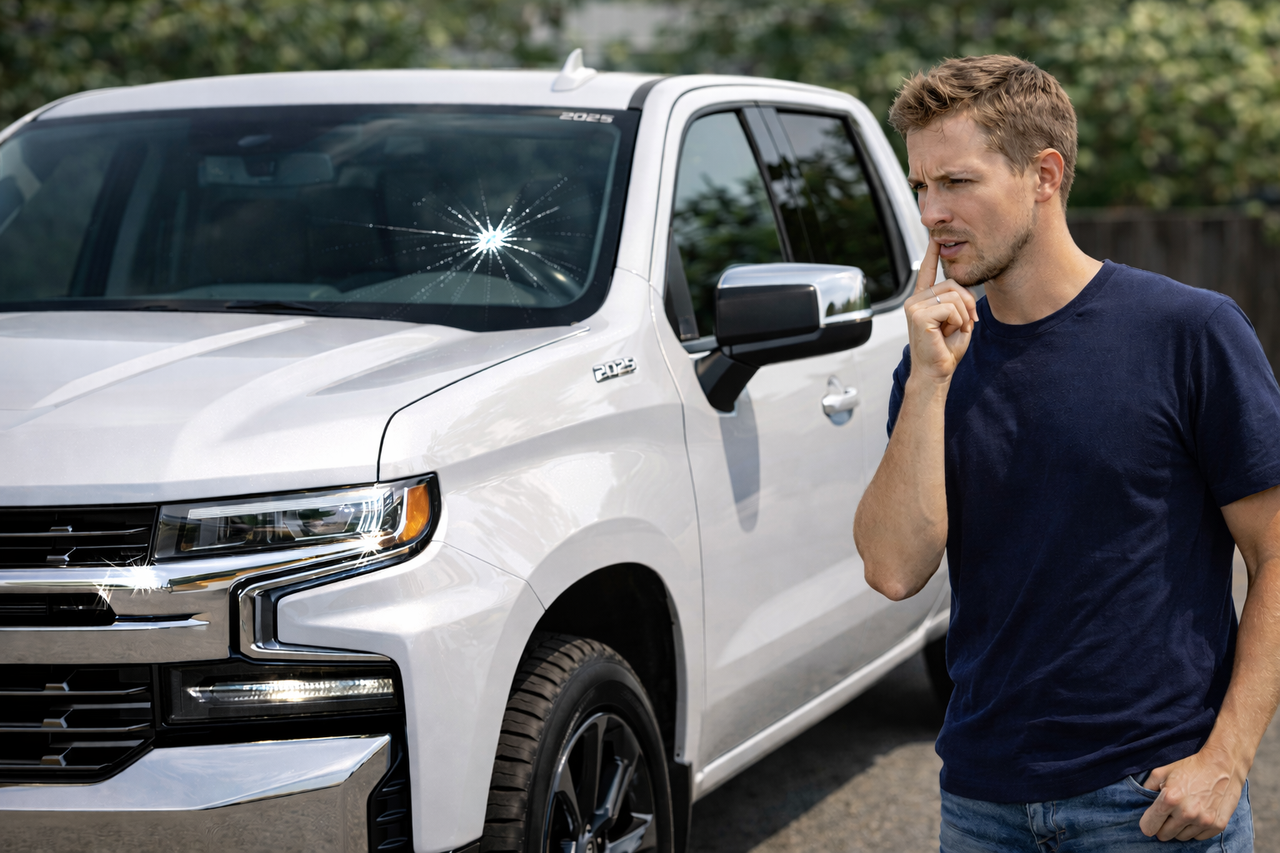
The quote you receive can differ by hundreds because of three local factors:
- Weather forces schedule timing. Humidity and temperature affect urethane cure times. A shop that waits for proper conditions and uses OEM‑approved adhesives may keep your car a few hours longer, but they reduce the risk of leaks and wind noise.
- ADAS recalibration capability. Not every shop has static and dynamic calibration equipment on site. Mobile services can handle many cars, but others require a shop visit or a dealer calibration. That adds cost and time.
- Glass tier choices. OEM glass from the vehicle manufacturer often costs more than high‑quality aftermarket glass. On some models the difference in fit and camera clarity is minor. On others, especially German luxury vehicles or late‑model trucks with HUD, the factory glass prevents persistent calibration errors.
When you ask for a Charlotte Windshield Quote, expect the shop to ask for your VIN. That is not a gimmick. The VIN tells the estimator which sensors, defrosters, tints, and brackets your specific car uses, and it helps avoid the classic surprise where a “simple” windshield turns out to be a $900 part once the ADAS camera enters the chat.
What insurance actually covers in North Carolina
North Carolina doesn’t require insurers to waive deductibles for glass. That means comprehensive coverage applies, but you will likely pay the deductible unless your policy includes a full glass endorsement. Many drivers carry a $500 comprehensive deductible. If your quote is $420 for a standard windshield, filing a claim makes no sense. If the replacement requires calibration and totals $875, the math becomes interesting. Paying the first $500, with your insurer covering the rest, might work out, but then you need to weigh potential side effects on future premiums.
Insurers see auto glass differently than at‑fault collisions. Most carriers do not raise rates for a single comprehensive claim for glass damage, especially when it is weather or road debris related. Still, patterns matter. If you file multiple glass claims within a short window, you can see an impact. Insurers also track claim frequency when underwriting renewals. In practice, one glass claim every few years in Charlotte rarely moves the needle. Three in eighteen months could, particularly if coupled with other claims.
Take a minute to check your policy declarations. Some carriers have added optional “full glass” or “zero deductible glass” endorsements in North Carolina. If you have that rider, the decision gets easy. If you do not, then the deductible, your ability to shop for preferred glass, and scheduling control come into play.
The insurance path: convenience with guardrails
Filing a claim has clear upsides. You protect cash flow, you lean on the carrier’s vendor network, and you outsource some headaches. With major insurers, the process is efficient. You report the damage, answer a few questions about the crack’s location and size, then you’re transferred to the carrier’s preferred glass administrator. In Charlotte, that often translates to a quick handoff to a large national chain or a vetted local partner. The scheduler offers mobile service at your office in South End or a shop appointment off Independence.
That convenience comes with tradeoffs. Insurers negotiate volume pricing with their preferred vendors. Those vendors usually install quality glass and use proper adhesives, but the parts list is guided by what the program allows. If you want OEM glass and your policy doesn’t specify it, you may need to make a case for it or pay the difference. On ADAS vehicles, some carriers approve only aftermarket glass and third‑party calibrations. That can work fine, but I have seen stubborn calibration errors with specific models that went away only after an OEM glass install at the dealership. If you drive a Subaru with EyeSight, a late‑model Toyota with lane tracing, or a high‑end European SUV with heads‑up display, ask the estimator directly about their experience and what happens if calibration fails.
The timeline can also be rigid. Preferred vendors carry the book of business, so during hail weeks or peak claim periods you may wait longer for a slot. If you need a pre‑work appointment in Ballantyne tomorrow, cash customers sometimes get more flexibility from smaller Charlotte Auto Glass shops.
The self‑pay route: control, speed, and more decisions
Paying out of pocket lets you call the shots. You can request OEM glass without arguing coverage, you can pick a shop that specializes in your brand, and you can often schedule sooner. Many independent Auto Glass Charlotte businesses will waive modest mobile fees for self‑pay customers, especially if you’re within their core service area. They may also offer same‑day or next‑morning installs, assuming they can get the part.
Self‑pay exposes you to the full price, of course. For standard windshields, the gap between network pricing and local market pricing can be small. For ADAS vehicles, you might pay more with a boutique shop, but you get that shop’s expertise and accountability. When a calibration flag pops up after the install, the shop that did the work owns the fix. Good shops pre‑scan and post‑scan your vehicle, document the calibration with printed or digital results, and tell you if a dealer‑level calibration is required for your specific make. That documentation matters if you ever need to prove that ADAS was set up correctly after glass work.
One complication appears for leased vehicles. Lessors sometimes require OEM glass for returns, and some specify that calibration records be on file. If your lease buy‑back inspection finds aftermarket glass on a model where the contract mandates OEM, you could face a charge. That is rare, but not imaginary. Check your lease terms or call the dealer’s service department before you choose a cheaper part.
Reading a Charlotte Windshield Quote like an insider
Most quotes break into four components: the glass itself, the adhesive kit and moldings, labor, and calibration. If your estimate lumps everything into a single number, ask for a one‑line breakdown so you can compare apples to apples.
For the glass line, “OEM” means the part is from the vehicle manufacturer’s supplier with the carmaker’s branding. “OEE” stands for original equipment equivalent, generally the same supplier without the automaker’s logo. “Aftermarket” covers other brands that meet DOT standards but may differ in acoustic damping or camera clarity. On some vehicles an OEE pane is indistinguishable from OEM. On others, the frit pattern, curvature, or optical quality makes the camera calibration fussier. Good shops will tell you when aftermarket is a safe bet and when it is a false economy.
Adhesives matter more than people think. High‑modulus, non‑conductive urethane that meets the carmaker’s specifications shortens safe drive‑away time and holds up better in extreme heat. Inferior adhesive can lead to wind noise, water leaks, or, in rare cases, compromised airbag performance where the glass helps support deployment. If a quote is suspiciously low, ask which adhesive system they use and the recommended safe drive‑away time. Ninety minutes is common in Charlotte summer weather for many systems, but humidity and temperature drive that window. On frosty mornings it can stretch beyond three hours.
Calibration is the wild card. There are two main types: static, done with targets and mats in a controlled environment, and dynamic, done on the road with a scan tool while the car learns lane markings and distances. Some vehicles require both. If your shop lists dynamic only for a model that the manufacturer specifies static and dynamic, you may face a dashboard Christmas tree later. The best shops know the OEM procedure by VIN and plan accordingly.
How the deductible shapes the decision
Run the numbers before you commit. If your comprehensive deductible is $250 and the Charlotte Windshield Quote is $500 with calibration, filing a claim makes financial sense for most people. If your deductible is $500 and the quote is $480, self‑pay is the obvious path. The gray zone sits with quotes between $600 and $900 against a $500 deductible. At that point consider your claim history and your appetite for negotiating parts and scheduling. If you plan to sell the car within a year and want to preserve a squeaky clean report, you might self‑pay to avoid any claim notation. If you intend to keep the car five years and prefer cash in the bank, insurance is attractive.
A note on discounts: Local shops sometimes offer 5 to 10 percent off for cash, first responders, or military. That can tip the balance for self‑pay. On the insurance side, some carriers require using their network to receive direct billing. If you insist on a specific shop outside the network, you can sometimes file for reimbursement, but you will pay up front and wait for the check. Document every line item, keep the calibration printout, and save the receipt.
Charlotte specifics you won’t find in a national guide
Construction along I‑85 and the constant churn of trucks around the intermodal yard mean loose debris is a fact of life. Chips happen. If you catch them early, resin repair costs around $90 to $140 for a single spot, less when a mobile tech is already onsite. Most insurers cover chip repairs with minimal or no deductible because the logic is simple: a $120 repair today avoids an $800 replacement next week. If a chip sits within the driver’s primary field of vision, some shops will advise against repair because the refraction can linger even after a skilled fix. That call depends on your tolerance. For a work truck, most folks accept the minor blemish. For a luxury sedan, they replace.
Hail events are sporadic but not rare in Mecklenburg County. After a storm, glass demand spikes and so do backorders. If your windshield shatters in a hailstorm and you can safely drive, you’ll move faster by calling two or three Auto Glass Charlotte shops early the next morning and asking about stock or expected delivery dates. If you only request a single quote and wait, you can lose days. During these surges, mobile service calendars fill fast. A shop appointment often beats waiting for mobile.
Heat cycling is another local factor. Cars parked uncovered in SouthPark lots during summer reach interior temperatures well above 120 degrees. A small crack grows faster under those swings. If you see a crack starting at the edge rather than the center, schedule sooner. Edge cracks propagate quickly because they relieve stress along the periphery of the glass.
OEM vs. aftermarket in the ADAS era
Brand loyalty is strong, and so are opinions about glass. I’ve watched two identical SUVs leave two different shops the same day. One had OEM glass, flawless calibration, and a bill north of a thousand. The other used high‑quality aftermarket glass from a reputable maker and calibrated just as cleanly at half the price. The variable was not the brand stamped on the corner, it was the camera platform and the shop’s process.
On vehicles like many Hondas and Toyotas from the past few years, aftermarket glass from recognized suppliers tends to perform well with calibration as long as the shop uses the correct alignment procedures. On certain models from BMW, Mercedes, and some Subarus, OEM glass reduces the risk of ghosting HUD images and calibration drift. You can ask the shop a simple question that separates pros from order takers: on my VIN, how often do you see calibration failures with aftermarket glass, and what is your plan if it fails? A good shop will give you a number, auto glass chip repair Charlotte NC 28262 not a shrug. If they claim it never fails, get a second opinion.
What happens if calibration is skipped or sloppy
Skipping calibration on an ADAS‑equipped vehicle is not a harmless shortcut. The camera might appear to work, but the system’s interpretation of distance and lane position can be off. I’ve driven a vehicle after a sloppy dynamic calibration where the lane departure warning chimed a beat too late on wide lanes and stayed quiet on narrow ones. The driver thought it felt “different,” but could not pin it down. On a sudden swerve to avoid a mattress on I‑277, “different” becomes meaningful.
If your dash lights up with ADAS warnings after the install, do not wait it out. Call the shop immediately. Good shops will re‑scan and recalibrate at no charge. If a shop shrugs off warnings and tells you to “give it a week,” that is a red flag. On rare occasions a windshield bracket is misaligned or a camera mount is slightly out of tolerance. Fixing that requires the installer to pull the glass and set it again, which is one more reason to choose a team that does the work right the first time.
Scheduling, mobile installs, and safe drive‑away time
Mobile installs are a gift when your schedule is tight. In Charlotte, many technicians can come to your office parking deck or your driveway in University City. Mobile makes sense for standard replacements and many calibrations, especially dynamic ones that can be completed on nearby roads. Static calibrations require space for targets and correct lighting, which favors a shop bay. If a tech proposes a static calibration in a cramped garage with uneven lighting, ask how they will control reflections and distances. Quality calibrations require measured setups.
Safe drive‑away time is not a suggestion. The urethane needs to cure to a specified strength before the vehicle is roadworthy, particularly for cars where the passenger airbag uses the windshield as a backstop. In summer heat with the right adhesive, that window can be as short as an hour and a half. In winter mornings it can be three to four hours. A legitimate Charlotte Windshield Quote includes a note about safe drive‑away. If the installer pushes you to leave immediately, that is not professional.
How to choose a shop when every website says “best in Charlotte”
Marketing copy sounds the same after the third website. The following quick checks usually separate solid operators from the rest:
- Ask whether they provide pre‑ and post‑scan reports and calibration certificates tied to your VIN. Shops that invest in documentation take the work seriously.
- Request clarity on parts: OEM, OEE, or aftermarket by brand, and why they recommend that choice for your vehicle. Specific reasons beat vague assurances.
- Confirm safe drive‑away time and whether weather conditions could delay your release. Mature shops build this into scheduling rather than rush the job.
- Check whether mobile service includes weather contingencies. A pop‑up summer storm can ruin a seal if the car is open. Good teams carry tents or reschedule proactively.
- Verify who handles recalibration if it requires a dealer visit. If a dealer is needed, will the glass shop coordinate and cover transport, or is that on you?
Keep the list short and focused. The goal is not to interrogate, it is to see whether the shop speaks your car’s language.
When the quote is cheap enough to be suspicious
Race‑to‑the‑bottom pricing usually hides something. Common corners cut include lower grade adhesive, reusing damaged moldings, skipping a necessary recalibration, or using a glass pane whose optical quality makes the camera’s job harder. Price pressure also shows up in technician workloads. If a tech has to finish six installs before lunch, you are not getting careful prep, rust treatment on the pinch weld, or a slow check for leaks.
This does not mean the highest price is always best. It means a mid‑market quote from a shop that explains their process and stands behind calibration results is where most Charlotte buyers land. If you receive a price that is $150 below the next lowest for the same part and service, ask what changes. If the answer is “nothing, we just have the best price,” think twice.
Insurance vs. self‑pay: the practical tradeoffs
If you prefer to minimize out‑of‑pocket cost, and your deductible is modest or you have full glass coverage, insurance aligns with that goal. Expect to follow the carrier’s process and accept the approved vendor unless you push for a different shop and reimbursement. You will likely get a national installer with predictable quality and solid warranty coverage. You might wait longer during busy cycles, and you will have less influence over parts choices unless your policy allows it.
If you value control, speed, and a tailored parts decision, self‑pay gives you leverage. You can direct the work to a Charlotte Auto Glass specialist that knows your make, you can choose OEM for a lease return or a picky camera system, and you can often get on the schedule faster. You pay for that autonomy, but in edge cases it prevents repeated trips for calibration and nagging alerts.
Both paths can end with a clean, quiet cabin and a straight‑shooting camera. The difference lies in how much of the process you want to manage and how your policy lines up with the real price of the repair.
A short decision framework that actually helps
- If your quote is below your deductible by at least $100, self‑pay and keep the claim off your record.
- If your quote exceeds your deductible by $200 or more, and you haven’t had a comprehensive claim recently, file and use the insurer’s network.
- If your vehicle has ADAS and a history of finicky calibration, lean toward a shop with brand expertise, even if that means self‑pay or asking your carrier to approve that shop.
- If you lease, verify glass requirements. Choose OEM when the contract calls for it to avoid turn‑in surprises.
- If you can repair a chip today for a small fee, do it and skip the replacement entirely.
Where Charlotte drivers find value
Value is not the lowest price. It is the balance of part quality, installer skill, calibration accuracy, scheduling, and warranty support. Charlotte’s market has credible national chains and excellent independent shops. A strong Auto Glass Quote Charlotte drivers can trust reads like a plan, not a sales pitch. It identifies the glass type by brand, lists the adhesive system, specifies whether the job is mobile or in‑shop, includes calibration with the correct method for your VIN, and sets a realistic safe drive‑away time.
If you use insurance, ask whether the vendor offers OEM glass when justified and how they handle recalibration failures. If you self‑pay, ask about discounts and whether they price match comparable quotes that use the same parts and procedures.
Your windshield is part of the vehicle’s safety cage, not just a rain shield. Treat the decision with the same care you’d bring to brakes or tires. A day spent comparing two or three Charlotte Windshield Quote options, asking a few pointed questions, and weighing insurance against self‑pay will pay you back every time you drive east into the sunrise on Independence and your lane camera reads the world exactly as it should.
Leave a Reply